Friday, September 10, 2010
   
Text Size
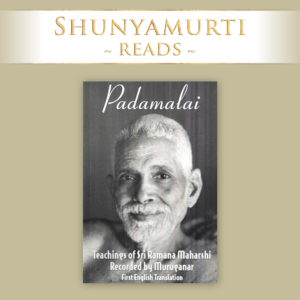
Sri Ramana MaharshiSri Ramana Maharshi says:
"Sat is aham pratyaya saram, the Self of selves. . . . Sat-sanga means association with sat or reality. One who knows or has realized sat is also regarded as sat. Such association with sat or with one who knows sat is absolutely necessary for all."


image image image image
Sat Yoga Ashram Blog "You have chosen to be the founders of a new age, a new world, to reach a new summit of human achievement. May you be blessed with the courage to carry through your true heart’s desire, and attain the One Self. May the Sat Yoga Ashram become the temple in which your joyous enlightenment is eternally consecrated." - Shunyamurti. Don´t miss the ongoing unfoldments of the birth of Heaven on Earth. View our ashram blog...
Sat Yoga: Union with the Truth of our Being Welcome to the Sat Yoga Institute. If you are looking for a refuge from the chaos and negativity, both internal and external; if you are seeking a place of peace and hope, of spiritual fellowship and love; if you wish to study in a wisdom school that integrates the highest Eastern and Western traditions; then you may have just discovered your spiritual home....
The Creation of An Ashram To participate in the creation of an ashram is the ultimate adventure. It is the greatest honor and privilege a human being can attain. This is because an ashram is the most sacred archetypal form of community. An ashram is a chrysalis in which humans can transform into gods. An ashram is the intentional creation of a sacred space in which the ego is transcended.
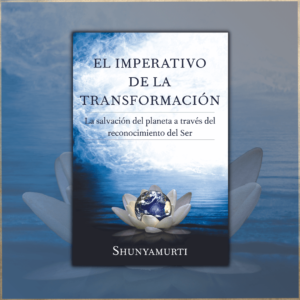
The Transformational Imperative Like alcoholics at a twelve-step meeting, we must admit the truth: existence has become unmanageable for the human species. At every level, from individual emotional stability to couple and family relationships to global politics, life is in deadlock. There is no solution to our problems—or even the possibility to will a solution—so long as human consciousness remains at its current level of incomplete development.

Satsangs: Community Gatherings

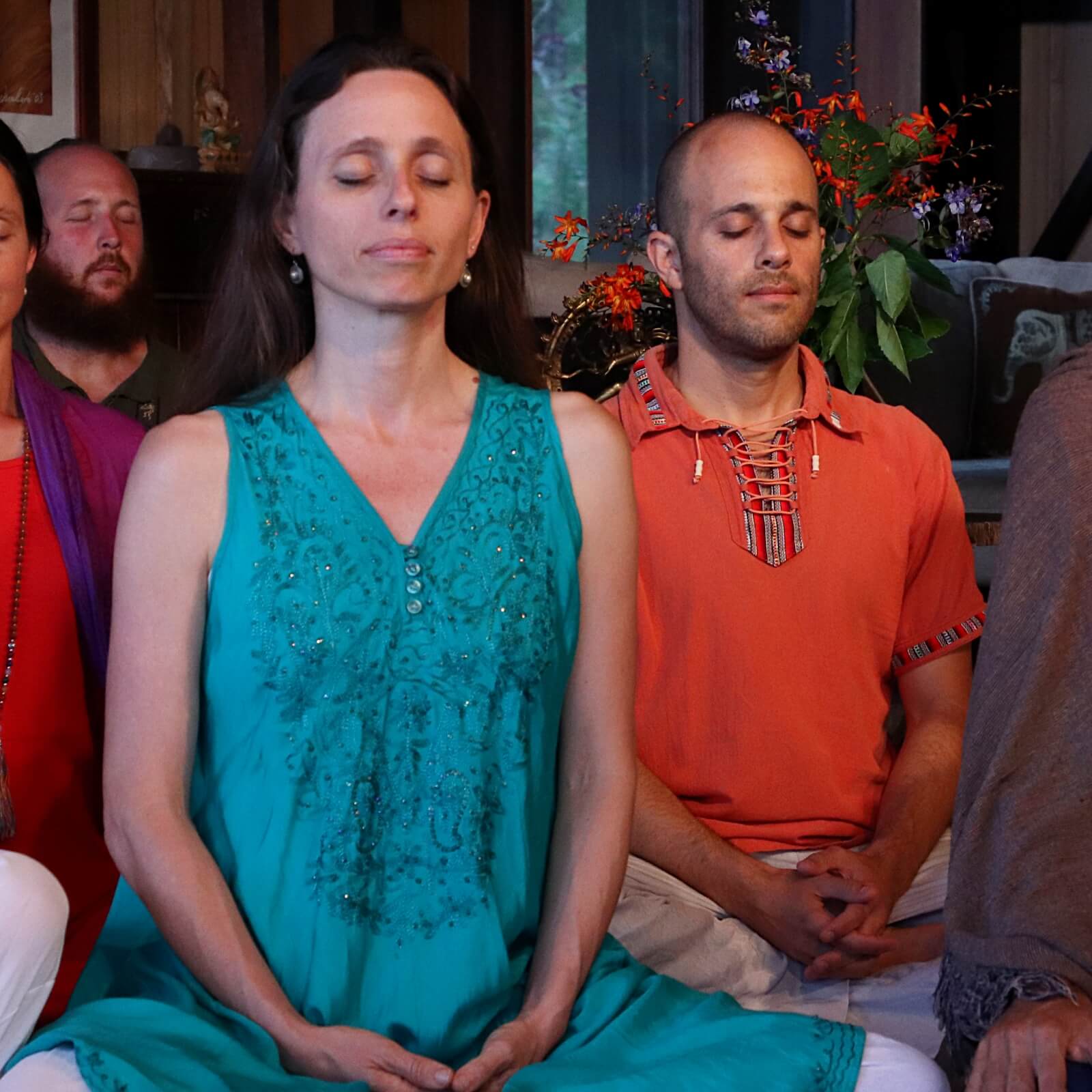
A satsang is a traditional gathering for the purpose of meditating in a positive group energy field. Satsangs are open events for individual's who are interested in learning more about the Sat Yoga Institute. Our Satsangs offer teachings and guided meditations led by Shunyamurti, the director and founder of the Sat Yoga Institute.

Orientations

A one-hour individual meeting is the first step to join all of the Sat Yoga Institute's classes & activities.

You are invited to participate in our free orientation class, where you will learn our philosophy, spiritual practices, student requirements, ethical guidelines, class schedule, and if you are interested, you can complete your application to become a Sat Yoga Student.

Sat Yoga Teaching Newsletter

To save you the trouble of checking the website to find out our schedule of events or if a new essay or audio clip has been added yet, we will send the links to the latest Sat Yoga teachings of Shunyamurti directly to your in-box...

View our newsletter archive...

Sattvic Classes & Activities

film_series_smallIn this special fundraiser event, we plan to show a wide variety of high-quality documentaries and feature films relating to the issues of greatest interest to those on the path of healing, psycho-spiritual development, and global understanding. As always, there will be a discussion period after the films are screened, so we may recapitulate what has been learned and share insights from our own experience. Read more...

Schedule: Every Friday night at 7:00pm.

Requisite: If you are new to Sat Yoga Institute, please set up an orientation before attending our Film Series.

View our full calendar of events!calendar-icon

psycho-spiritual-study-groupIn this hour of open discussion and study, students delve deeply into the psycho-spiritual teachings of Sat Yoga. Often we revisit recent teachings given by Shunyamurti in classes or weekend seminars. The basic study group, taught by Radha, focuses on specific modules of information that are at the core of Sat Yoga philosophy, including the chakra map; the ‘soular’ system and our circuits of desire; ego mind vs. Sat mind; the seven bodies; and many, many others. Read more… 

Schedule: Thursday evening at 5:30pm.

Requisite: If you are new to the Sat Yoga Institute, please sign up for an Orientation before attending our Study Group.

View our full calendar of events!calendar-icon

Sat Yoga Asanas Hatha Yoga ClassThe Sat Asana class focuses on deep relaxation, flexibility, and concentration through slow, mindful movements. Our asana class emphasizes Sat Yoga teachings on meditative presence and unity of body, mind, and Atman. The practice offers variations that cultivate supportive alignment, meditative breathing, and gradual approaches to more challenging poses. Read more...

Schedule: Wednesdays at 5:45pm and every Friday at 5:15pm.

Requisite: If you are new to Sat Yoga Institute, please set up an Orientation before applying to participate in our Sat Asana Class.

View our full calendar of events! calendar-icon

Sat Yoga Intermediate Book GroupOur book group gatherings are an opportunity to share and discuss insights into many different psycho-spiritual topics. In the Intermediate Book Group, we cover all of the world's religious and spiritual traditions as well as books on new scientific paradigms, including in such fields as psychology, quantum physics, and biosemiotics, as well as a variety of other mind-expanding subjects. Read more...

Schedule: Monthly.

Requisite: If you are new to Sat Yoga Institute, please set up an Orientation before applying to participate in our Intermediate Level Training.

View our full calendar of events! calendar-icon 

Sat Yoga Publications

Sounds of Nature Cd´s - From the Sat Yoga Ashram Costa Rica - Vol. 1 & 2

nature-sounds-1 nature-sounds-2itunes-logo

Video Teachings

View Video
“I wish you all a wholehearted welcome,” offers Shunyamurti, the spiritual director of the Sat Yoga Institute in Costa Rica. “And that’s...
View Video
“Sri Ramana was often emphatic in saying that meditation is a non-objective process,” reminds Shunyamurti, the spiritual director of the Sat...
View Video
"The paradox of the spiritual journey is that, in reality, all of us are already enlightened," explains Shunyamurti, the spiritual director of the...
View Video
“The paradox of the spiritual journey is that, in reality, all of us are already enlightened,” explains Shunyamurti, the spiritual director of...
View Video
“We have come together to meditate. But why? What do we wish to achieve through meditation,” asks Shunyamurti, the director of the Sat Yoga...
View Video
“We have come together to meditate. But why? What do we wish to achieve through meditation,” asks Shunyamurti, the director of the Sat Yoga...
View Video
"Each of us must be responsible for our own liberation. It's not something that an other can do for you," reminds Shunyamurti, the spiritual...
View Video
"All the sages of every tradition of spiritual realization agree that our true nature is luminous, loveful, joyous, blissful, eternal, non-local...

Audio & Podcast

Weekly audio recordings of priceless spiritual Sat Yoga teachings of Shunyamurti, the founder and research director of the Sat Yoga Institute in Costa Rica.
  • Spiritual Entropy: Now and Then – 09.02.10
    Student Comment: When you mentioned the “Hundredth Yogi Effect,” or critical mass, I remembered all of the other spiritual traditions, such as Christianity, Buddhism, etc., which all had great expectations to transform the world as well. I agree that the problem of the world today is a spiritual problem, but I have noticed that there [...]
  • Two-Pointedness – 09.02.10
    Excerpt: “As you all know, I’m sure, it goes quite against the grain of this time period to be building a monastery. . . . [and] spiritual retreats of the old type are falling away, losing their credibility, their integrity, the interest of people in leading a life devoted to contemplation of God, and a [...]

  • Reading: The Ladder to Heaven – 08.26.10
    Student Question: In school today we were learning about how to teach kids to read. And in one particular model, the first phrase that you teach the kids is that reading is thinking. I heard that and, I don’t know why, but it really rubbed me the wrong way. Is that true, that reading is [...]

  • The Mirror Stage & Ego Formation – 08.26.10
    Student Comment: During the teaching, you talked about how the ego is formed early on. So I was wondering how it forms. It has to come from somewhere. “Humans are like monkeys; we imitate the other. And so the infant takes in the mirroring from the parents—the mother, primarily—and begins to express that back, and that [...]
  • Satyam Shivam Sundaram – 08.26.10
    “One of the bhajans that was playing during our preliminary meditation was sung by Lata Mangeskar, a very famous early Bollywood singer when it was still relatively pure, and they were singing mantras. And the first mantra was ‘Satyam Shivam Sundaram.’ And this translates as ‘the True, the Good, and the Beautiful.’ And the aim [...]
  • The Vishnu Gate & Shiva Gate – 08.19.10
    Student Question: There are two gates upon arriving at the Sat Yoga Ashram, previously known as the North Gate and the South Gate. Now they’re Shiva Gate and Vishnu Gate. Could you please describe the two entrances to the ashram? “Vishnu and Shiva are two archetypes,” reveals Shunyamurti, the archetypal leader of the Sat Yoga Institute [...]

Recent Spiritual Essays

  • The Devolution and Rebirth of Western Thought
    Western thought has moved from Platonic texts to tectonic plates. We began with the unshakeable Absolute, and we are now on the very shaky ground of scientific beliefs that we once thought were solid bedrock, but that are now recognized as being subject to cataclysmic seismic shifts, as new paradigms of understanding emerge with a stunning suddenness that is overturning our conception of what we are.

    Once we focused our minds on the unmoving eternal Ideas that transcend the physical dimension. But Plato’s poetry soon paled as inquiring minds built their empires with empirical concepts designed to confer command and control. Aristotle shifted our gaze first to the unmoved Prime Mover, and then to the motions that Mover created. But his student, Alexander the Great, had other uses for philosophy. Military technology was first on his agenda. Mathematics developed as an instrument to map the heavens as well as the Earth, to gain control through knowledge. And gradually the scientific drive to understand the structures that appear in this world and the dynamic interactions of such structures enabled us to build extremely complex theories about the nature of reality. These theories led to ever more marvelous technologies, and the result was apparent mastery of Nature.


    Written on Saturday, 04 September 2010 20:30 in Essays

  • Coming Out of Lostness

    All of us are emanations of the divine light and the oneness of the supreme love. But the ego plays hide-and-seek with that light and that love and eventually the ego is lost more often than it is found. If we are going to get out of the game of lost and found, we have to do something that the Sufis call dhikr or zikr, which is the practice of the remembrance of God.

    The Sufis aren’t the only ones who talk about remembering God. This is a universal practice across the different wisdom traditions. But the Sufis have gone into this idea much deeper than many of the other traditions, and so this month we’re beginning the study of the Sufi wisdom tradition. Getting deeper into this sacred idea of zikr is very important. It is an essential subject for us, because the whole question of liberation from the ego drives revolves around whether you are able to remember God, and how deeply. What does that really mean, "remember"? When did you meet God in the first place? Many people will say: "How can I remember if He is a stranger to me?"


    Written on Friday, 06 August 2010 19:16 in Essays

  • From Tragic Love to Blissful Love: The Path of Sat Yoga
    So life is about love, right? The problem is that, for the ego, love is always tragic. Romantic love is a form of bhakti, devotion. In fact, you could say that every form of suffering is a form of bhakti. Our neurotic suffering is always a result of mis-directed devotion that leads to devastation.

    One of the great thinkers of the twentieth century who has explored the unconscious mind of human beings, perhaps more profoundly than anyone in history, is a French theorist named Jacques Lacan. Toward the end of his life, he made a very important pun in French on the word symptom, referring to it as Saint Thom, which in French is pronounced the same as symptome. He was alluding to Saint Thomas Aquinas, the great Catholic philosopher. Lacan implied that every symptom is our attempt at sainthood. Every love object becomes our cross to bear, and the site of our crucifixion.


    Written on Saturday, 03 July 2010 02:32 in Essays

Testimonials

  • Sat Yoga will challenge your sense of Self, your belief structures and perceptions.  Engaging in such an experience holds potential for disruptive change and resulting  temporary discomfort.  What becomes critical then, is one’s openness to new information and enhanced self-awareness; and, the manner in which such growth is nurtured.


    Written on Thursday, 29 April 2010 23:49 in Testimonials

Donations

Please donate to Sat Yoga Institute. All donations go to the following projects:

  • Ashram & Eco-village Development
  • Simultaneous Translation Headsets
  • University Expenses
  • Website Maintenance
  • Spiritual Hospice Services
  • Special Healing Events
  • A No-Fee Spiritual Clinic
  • Scholarships to Deserving Retreatants
  • Book Publication
  • Creation of Guided Meditation CD's

Sat Yoga Opinion Poll

Do you think that eating a diet limited to organic raw fruits and vegetables will help your spiritual development?

Sat Yoga Institute © Copyright 2010
All Rights Reserved
Restore Default Settings